Thursday, June 14, 2012

Paternity Suits: The Brass Tax

When we left off yesterday, a professional athlete was faced with a claim that he had fathered a baby with a woman not his wife (for our purposes, it is not important whether he is actually married or not—the point is that they aren’t living in the same household).  We considered the strategies he might have to choose and discussed some of the background social issues involved.  Today, we get down to brass tax:  just how the courts determine what is a “fair” child support award for Superstar Junior.


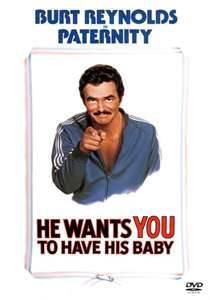
A 1981 flick--not exactly on point, but
there's not a lot to choose from for this topic!
“OK, the Kid's Mine.  Now What?”


Once paternity has been established, the next issue to, er, tackle is how much a court should award in child support.* As you can imagine, the high salaries of professional athletes can make "child support" synonymous with "windfall." On the one hand, it seems fair to hold a famous father financially responsible for the upbringing of a child he helped create the same as we would an average Joe.   


On the other hand, we don’t want to encourage the reckless promiscuity (or as we discussed yesterday, intentional seductions) by handing the woman a winning lottery ticket.  None of this matters, though.  It is important to understand that, in deciding family law cases, judges must put all the social complexities aside and base decisions on what is “in the best interest of the child."


Generally speaking, courts use three methods for determining child support levels.  The method that is ultimately used is determined by the law of that state:


     1.     Income Shares Method:  After determining the total income of both parents, the court estimates what percentage of that total income would be spent on the expenses for that child (plus any actual additional expenses unique to the situation).  Each parent's financial obligation is determined by the ratio of his or her income level to the combined income.

     2.     Melson Formula:  The court determines a "subsistence income"--one that meets the basic needs of both parents and all minor children of the parents.  The total income remaining is used to determine the amount of support.

     3.     Percentage of Income:  This is the simplest method, especially because the state's law dictates the percentage of the parent's income that goes to one child.  In Wisconsin, for example, a parent pays 17% of his or her income for the support of one child.  Under this model, the court also has the discretion to modify the award to the extent that imposing the statutory percentage would yield an unfair result.


The third method isn't just the easiest to administer, it is also the preferred method for professional athletes, since their income is almost guaranteed to be substantially higher than the mother's.  The problem with the first two approaches—other than their complexity—is that it is not always easy to determine which expenses are appropriate for determining the amount of support.  For example, should the court base expenses on the need of the average American (or citizen of that state), or should it be based on the expenses of children in wealthy households (e.g., a $10,000 mortgage payment vs. $1,200 rent payment, live-in nanny, horseback riding lessons, summer-long language-immersion trip to France)?


“How Can I Make Sure My—I Mean the Kid’s—Money Will Be Well Spent?”


Still, even with an eminently sympathetic judge, no matter what formula is used, the pro will still be the primary (if not only) source of support for the child, and yet will have little or no say in how the money is spent.  To allay concerns that the money will not be spent for the welfare of the child, courts have another tool at their disposal: the creation of a trust.  In such cases, a third party--perhaps a grandparent or attorney--is in charge of making sure the money is spent appropriately.  Even if the mother is in charge of the funds, though, she is obligated by law to spend the money in a responsible way.

Admit it--you'd give anything to be a trust fund baby!


There's another good reason to establish a trust beyond the concern for how the money is spent.  Although a player might have a very lucrative career with a high income at the time support is determined, he runs the risk of having his career shortened by injury, age, or a decline in skill.  If he makes money from endorsement contracts as well, his income could experience changes because of a dispute with the company in question, or even a downturn in the economy.


“Pay No Attention to Junior, Coach…I’m Ready to Play!”


Anyone who has kids can tell you that starting a family--no matter what form that family takes--changes your life.  For athletes in these touchy situations, though, the impact goes beyond dollars and cents.  Remember Antonio Cromartie?  The Jets had to give him a $500,000 salary advance so he could catch up on his back child support.  Not the ideal way to start a relationship with an employer. 

"Three hundred thousand?  No, man, I said five hundred thou.  Make it happen!"


When New England running back Dave Meggett failed to respond to a paternity claim that had been filed in Florida, he faced the threat of arrest if he traveled with the team to play the Jacksonville Jaguars.  The Patriots front office had to get involved--creating a major distraction for the team.  All the fuss seems a bit silly now that Meggett is serving a 30-year prison term for burglary and sexual misconduct.


One of the more notorious cases from the NBA was that of Shawn Kemp (left), who had fathered seven children by the age of 28.  According to the 1998 SI article,** a source in the (then) Seattle SuperSonics organization said that the distraction of so many support obligations, coupled with frustration of not be able to see some of his children, were the primary causes of Kemp’s meltdown during the 1997 season.  In the first half of the season, Kemp averaged 21.3 points per game and 11 rebounds; after the All-Star break, his averages dropped to 15.1 points and 8.5 rebounds.  He ultimately demanded a trade, and the same source said that his mounting support obligations were part of his motive for making the demand.


Of course, no matter the circumstances, and no matter the cost or distractions involved, both sides should remember that they have brought a child into the world.  With each new child comes new opportunity to make the world a better place, and we do that by giving that child the best chance for happiness, success and self-respect.  Not every family starts in the “traditional” way, but what matters is that every child knows he has a family that loves him.  And that’s not something a court of law can create—all of us, sports star or not, have to make that happen.


Well, I hope you've enjoyed this look at one of the more personal, yet public, topics in football.  To all fathers out there—traditional or nontraditional, expected or unexpected—have a wonderful Father’s Day!


*The primary legal source for my original law school paper (and now this post) was an article written by two player attorneys in Dallas, Texas:  R. Scott Downing and Katherine A. Kinser, “Family Law Issues That Impact the Professional Athlete,” published in the Journal of the American Academy of Matrimonial Law (15 J. Am. Acad. Matrimonial Law, 337 (1998)).


**Click here for a link to that article.

Wednesday, June 13, 2012

Need a Tie to Go With That Paternity Suit?

The cover of the article's issue
Several years ago, Sports Illustrated ran an in-depth article on the legal and social issues surrounding the growing number of professional athletes fathering children out of wedlock, often with multiple women.*  Obviously, all men who father children with women not their wives face the same set of issues:  the financial obligations; battles over legal issues like custody and decisions regarding the child's upbringing; how the existence of the child will impact other areas of his life; and, most critical, forging a relationship with that child.  For professional athletes, however, these issues can be much more complicated.


My alma mater.  Hail!
In my first year of law school at the University of Michigan, we were allowed to take one "elective" class during our second semester.  I chose to take Sports Law, a course being offered for the first time at the school.  A third of our grade was going to be based on a paper, the topic of which could be any of our choosing, as long as it had something to do with sports and law. 


Inspired by the SI article, which had been published two years earlier, I decided to write about the issues professional athletes face--both in the courtroom and the locker room--when confronted with a paternity lawsuit.  My topic choice was validated when a prominent agent (and lawyer) came to speak to our class.  Right off the bat he told us that if you want to become a sports agent, you have to become familiar with family law.  Although that was over ten years ago, this issue has gotten some fresh attention recently, when it came out that New York Jets cornerback Antonio Cromartie had fathered ten children with eight different women, including a daughter and son with his current wife.**  It became a story when he struggled to name all of his kids during an episode of the HBO hit series Hard Knocks:


With Father's Day fast approaching, I thought this would be as good a time as any to dust off the old law school files and resurrect my paper (the more interesting bits, anyway), which I titled "Personal Foul: Paternity Claims Against Professional Athletes" (clever, huh?).  Fortunately for you, this post (split between today and tomorrow) is not a verbatim rendering of the original--it's much shorter and I've omitted the legal speak wherever possible.


"Honey, I'm Pregnant."


Whether hoped for or completely unexpected, these three little words often elicit the same emotions--in more or less the same order:  shock, excitement, fear and wonder.  For the pro player, though, soon after hearing these words, several questions might pop into their heads when the woman giving them this news is not his wife.  For example, if there is any doubt in his mind that he could be father:

  • Should I deny paternity right away, and risk looking like an a-hole to my fans?
  • If I act the "gentleman" and own up to it right away, do I hurt myself when I challenge paternity later?
  • What if I don't do anything?  (By the way, keeping mum until paternity is conclusively established will typically be the preference of the lawyers—to the dismay of agents and publicity reps).

  
Then, once paternity is established, the pro's lawyers have to wonder:

  • How will a court figure out how much my client has to pay in support?
  • How can we make sure that the money is best used for the child's benefit?


I know this is a touchy subject, so before we get into the legal meat of the matter, let's lay a few things on the table.
First, the negatives.  Though many paternity cases involving pro athletes involve the irresponsible actions of an immature, inexperienced player and a probably equally immature woman, it is an unfortunate fact that there are women who target professional athletes and willfully seduce them in the hopes of getting pregnant.  In the SI article, former 49ers QB Jim Drunkenmiller recalled a moment from his NFL rookie orientation when two HIV-positive NFL groupies described how they seduced players.  Said Drunkenmiller:  "They wanted to let everyone know that girls out there will take a chance to get pregnant. They'll do anything, sometimes, to get money out of you."


And while there are definitely cases where a player was blind (perhaps willfully so) to the potential consequences of his promiscuity, some players are well aware of the stakes, and even seem to take pride in their fathering prowess--Antonio Cromartie being an apparent example.


Now for some positives... 
First, professional athletes among the most reliable at paying child support.  Before you get all sentimental about it, though, the reasons for their reliability are more practical than emotional:  they can usually afford to pay; they are easy to locate; and they often have lawyers, agents and/or accountants to make sure they are not delinquent in their payments.
Second, rookies coming right out of college aren't just thrown to the wolves, for lack of a better phrase.  As mentioned above, the NFL and the other major sports leagues conduct rookie orientation programs to advise them on how to deal with the various responsibilities and occupational hazards that go along with professional sports.  Topics for lessons include wealth management, dealing with the media and, yes, conduct with members of the opposite sex.  Never knew turning pro had so many pitfalls, huh? 


Several NFL teams, coaches and players are taking all of this a step further and sponsoring programs that encourage all fathers—fans and players alike—to actively participate in fatherhood.  One notable example should be familiar to “Reading Huddle” followers, who read Tony Dungy’s memoir, Quiet Strength

The Dungy Family

Former Indianapolis Colts coach Tony Dungy is a proud father and has always put family first.  He started an organization called All Pro Dad, which sponsors events for fathers and their kids, including monthly local breakfasts where fathers can build memories with their children and discuss family topics with other dads.  Pittsburgh Steelers coach Mike Tomlin, Baltimore Ravens coach John Harbaugh and several current and former NFL players are active spokesmen for the organization.  Visit www.allprodad.com to find events in your area.


Tomorrow, we’ll take a look at what happens when paternity is established and the courts have to figure out how much Daddy needs to pay in support.  Plus we’ll take a look at a few cases where this very personal issue spilled over to the playing field.  You don’t want to miss it!


*Grant Wahl & L. Jon Wertheim, “Paternity Ward,” Sports Illustrated, May 4, 1998.

**In a few months that number will skip to twelve, as Cromartie’s wife is pregnant with twins.

Friday, June 8, 2012

Football History 101: George Halas and the Galloping Ghost

Our last history lesson found football taking a big step forward in the development of the game, with the legalization of the forward pass and a few other rule changes designed to improve player safety.  Today, we examine the way professional football made it through a brief downturn and emerged in the form of an organized league.


As I mentioned in my first Football History 101 post, I'll eventually be focusing solely on the history of football at the professional level.  However, as I'm sure you've noticed, in the early days of pigskin progress in the pros was mostly driven by advances made at the college level--particularly the rule changes I just mentioned.


Today, however, marks the last time we will discuss the status of the college game in parallel with the pros, and it's during the time period we're looking at today--the 1910s and 1920s--that the college game had the most influence on developing football as a popular pastime in the U.S.


You'll remember that in 1906 a gambling scandal cast a cloud over a pair of rival teams in Ohio that threatened to erode what little public support the sport had garnered to that point.  Fortunately, it would manage to survive, thanks in large part to the surging popularity of college football--and the rise of a new brand of player idols, the skill players.


Football's popularity at the college level was due, in turn, to those new rules President Theodore Roosevelt insisted on when he assembled the college football powerhouses in 1905.  Obviously, the legalization of the forward pass, even though it took a while to catch on, would ultimately be the most significant change to the sport, from a pure playing perspective.  However, it was the creation of the neutral zone between the offensive and defensive lines, and the requirement that linemen line up ON the line of scrimmage, that would allow the guys who actually carried the ball to grab the spotlight.


You see, when opposing teams were allowed to line up nose-to-nose, and some guys could take running starts at the other team, the result on virtually every play was a mountain of humanity, with only the biggest bruisers visible as they literally threw the smaller guys around (right)Now that there was a chance for the smaller guys--i.e., the running backs and quarterbacks--to see daylight, fans could better observe their strength, athleticism and quickness.  Pretty soon, it was the scrappy backs that commanded the crowds' attention and ardour--legends like Carlisle Indian School's Jim Thorpe and Notre Dame's George Gipp, a.k.a. "the Gipper" (who was famously portrait by a young Ronald Reagan in the film Knute Rockne, All American).

The Gipper

So, how did this help the pro teams?  Some were lucky enough to convince some of these big college stars to play for them, under assumed names, for money.  Jim Thorpe, for example, got a $250 per game salary in 1915 with the Canton Bulldogs (one of the teams involved in the nasty gambling brouhaha).  His presence was a major draw, reflected in the gate receipts for Canton and every team they visited.  By 1916, several teams in Ohio were experiencing a resurgence thanks to the presence of one or more big college stars on their rosters.


As you might imagine, America's involvement in World War I changed the gridiron landscape:  young men not in college were enlisting, and those just graduating opted to hone their football skills in the service.  After the war, though, large numbers of players in the latter category took their skills to the pro teams--enough to field competitive teams outside the State of Ohio, in places like Pennsylvania, Illinois and Wisconsin.


One of these new teams, the Decatur Staleys in Illinois, became one of the premier teams in the country.  Owned by A.E. Staley, it was the company team of Staley Starchworks and, along with the company baseball team, served as advertising for the business.

George Halas is in the middle of the front row.

Staley hired a popular two-sport athlete, George Halas, to coach his team (Halas played for the New York Yankees until he was replaced by Babe Ruth).  In addition to coaching the team, Halas was tasked with scheduling and recruiting (and given ample resources for the latter), so he became the de facto general manager for the team as well.


In the course of finding opponents for his team, Halas became involved in  an effort with several other teams to organize a league.  On August 20, 1920, four Ohio teams met and they created the American Professional Football Association (APFA).  They invited several more teams, including the Staleys, to a follow-up meeting in September; Jim Thorpe was named president at that meeting.


Even though its first two seasons were characterized by large numbers of vacant seats and lackluster play (compared to the college game--pro players were older, and they had full-time jobs, which meant less time to practice to hone skills and learn more complicated and tricky plays), the league managed to survive.  In 1921, the APFA had twenty-one members, a new president in a promoter named Joe Carr, and the following year had a new name:  the National Football League.  The organization that started in a car dealership conference room never looked back.


One of the figures that most effectively guided the NFL into the Roaring Twenties was George Halas.  Halas had moved the team to Chicago (A.E. Staley had dropped them as his company team) and renamed them the Bears.  He helped the league most by snagging the most dynamic player coming out of college in 1925--Harold "Red" Grange, a.k.a. "the Galloping Ghost."  He earned that nickname by being able to run into a crowd of tacklers, disappear, and emerge on the other side--still carrying the ball--eventually galloping his way to the end zone.


Grange's 1925 season for Illinois made him a legend.  When the Fighting Illini battled the University of Michigan Wolverines, who were on a 20-game winning streak, Grange scored four touchdowns in the first quarter--the shortest run for 45 yards.  He would score another two times before the game was over.  When they visited the University of Pennsylvania, they were underdogs, but behind the Galloping Ghost, they won convincingly, 24-2.  Grange scored all three touchdowns and had 363 total yards.


A Bears program featuring Grange on the cover
Having Grange play for the Bears gave the NFL the shot in the arm it so desperately needed.  Grange had hired an agent, C.C. Pyle, who was an event promotion specialist by trade.  Though it would be unheard of today, Pyle and Bears owner George Halas worked together to schedule a whirlwind tour of the league after the completion of the games that had already been scheduled.  This tour lasted from Christmas Day through January, and included games in warm-weather cities.  When all was said and done, Red Grange played before 300,000 fans over a 10-week span--an unprecedented number.  Incidentally, Grange's contract with the Bears included a share of gate receipts, so he ended up with a huge payday in the end.


This show biz spectacle, so carefully crafted by Pyle and Halas, earned the NFL a share of the football glory along with the colleges, and launched the careers of both Pyle and Halas.  The rise of George Halas was important to professional football, as he would continue to press for changes and advances in the game--some of which we will learn about in our next lesson.

Wednesday, June 6, 2012

World War II NFL Heroes

Sixty-eight years ago today, 160,000 Allied troops stormed the beaches of Normandy in a concerted effort to drive the Nazis out of France and back toward Berlin.  It was the largest amphibious invasion ever conducted.


Last week, I ran a post about Pat Tillman, the former Arizona Cardinal who turned down a lucrative contract to serve his country in the wake of 9-11.  You may remember that I included a link to the Pro Football Hall of Fame's site that honors other NFL players who have died in the service of our country.  Today, we're going to learn more about two players among that number who perished in France after the Normandy Invasion:  Mike Basca and Al Blozis.


MIKE BASCA


Mike Basca was born December 4, 1917 in Phoenixville, Pennsylvania, where he was a high school football star, playing positions on both sides of the ball, including quarterback.  He attended Villanova University and played halfback for his hometown team, the Philadelphia Eagles, for only one season.  His last game was against the Washington Redskins on December 7, 1941, the day of the attack on Pearl Harbor.  He enlisted in the Army three days later.


Basca's first significant tour of duty was as an inaugural member of the Eastern Army All-Stars Football Team, which played professional teams to raise money for the Army Emergency Relief Fund.  Eventually achieving the rank of Corporal, he was assigned to the 4th Armored Division as a tank commander.  His division landed on the Utah beach a little over a month after D-Day.  He had only been in combat for four months when his tank was struck by an anti-tank round, killing him instantly.


AL BLOZIS

Growing up in New Jersey, Blozis became a star with the discus and shot put; he won national championships in those events while attending Georgetown University.  His athleticism earned him a fifth-round draft pick by the New York Giants in the 1942 NFL Draft, for whom he played offensive and defensive tackle.  Although he only played two full seasons in the NFL, he made an impression, earning All-Star/All-Pro honors in both seasons.


Clearly an imposing force on the field, Al's great stature (6' 6", 245 pounds) almost kept him from serving in the military--he had to convince the Army to waive its size limits to let him enlist.  After his enlistment in December 1943, Blozis was sent to Fort Benning for officers' training (his first assignment was as a physical instructor at Walter Reed General Hospital in Washington, DC).  His shot put prowess served him well at Fort Benning, where he set the Army's record for hand grenade throwing at 94 yards, 2 feet 6.5 inches.


Al was eventually commissioned as a second lieutenant and assigned to the 28th Infantry Division.  During a scouting mission in France's Vosges Mountains in January 1945, two of Blozis' men went missing while on patrol.  Blozis set out by himself to search for them and never returned.  His death was confirmed three months later.


Al Blozis' #32 jersey was eventually retired by the New York Giants.  True Comics memorialized Blozis in a story it ran in 1946 titled "The Human Howitzer."


Tuesday, June 5, 2012

As Long As the Lawyers Get Paid…

You may have noticed that the NFL has been getting peppered with lawsuits recently.  With such a litigious offseason, and being a former lawyer, I thought you might appreciate a summary of what’s going on in the NFL’s legal world right now and, later, a look at some of the many legal issues that face the league and NFL teams alike.


We’ll start today one of the most recent and interesting cases, filed by Jonathan Vilma against NFL Commissioner Roger Goodell.


Jonathan Vilma v. Roger Goodell  (filed May 17, 2012 in U.S. District Court, Eastern District of Louisiana)


On May 17th, New Orleans Saints linebacker Jonathan Vilma filed a lawsuit against NFL Commissioner Roger Goodell for libel and slander.  Vilma is one of several Saints players (some of whom are no longer with the team) who were recently punished for their role in the New Orleans Saints “bounty” system, under which players were rewarded with cash “bounties” for injuring and/or sidelining opponents (a scandal that has been dubbed “Bountygate” by the media—how original).  Vilma received the harshest punishment among the players, with a suspension for the entire 2012 season.

Vilma (51) and the coach behind Bountygate, Gregg Williams


Vilma claims that Goodell committed libel, slander and the intentional infliction of emotional distress in the course of disciplining Vilma.  The lawsuit, filed in federal court in Louisiana, claims that public statements made concerning Vilma’s involvement in Bountygate were false.  Vilma has vehemently denied his alleged role in the team’s bounty system and has appealed his suspension.  He has also demanded that Goodell release any evidence he has that directly links him to the payment of bounties.


The implications of this suit on the NFL go well beyond this isolated case.  Before I get into that, however, allow me to give a brief law lesson…


LIBEL AND SLANDER

You will hear the media refer to this case as a defamation lawsuit.  “Defamation” is an umbrella term that covers any false statements made about someone else that cause some harm to the subject of the statements.  Black’s Law Dictionary, the Webster’s of J.D.s, defines “defamation” as “[a]n intentional false communication…that injures another’s reputation or good name.”


It is important, though, to understand that Vilma’s suit specifically alleges that Goodell committed libel and slander when accusing him of being part of the bounty scandal.  “Libel” is defamation that is communicated in writing, pictures or signs.  Black’s elaborates further:  “In its most general sense, any publication that is injurious to the reputation of another.”  As you might have guessed, “slander” is the oral communication of false statements that injure another’s reputation.  Of course, an absolute defense against to charges of libel and slander is proof that the statements made about the defendant were true.

Get it?  'Cause he's a mime, and slander is spoken? Hah!


Why is it important to distinguish libel and slander from defamation?  In any correctly-written legal complaint, and Vilma’s is one, the plaintiff must set out each legal basis for the lawsuit separately.  Then, he must prove each theory to receive damages.  If one theory can’t be proven, then he may still have a case under another.  During the pretrial process, some theories might be thrown out, or dismissed, leaving others open for trial.


Vilma’s complaint claims five theories of libel:  (1) libel per se*, with injury to professional reputation; (2) libel per se, with injury to personal reputation; (3) libel per se, with accusations of criminal conduct; (4) libel by implication; and (5) libel with reckless disregard, or malice.  Since libel applies to written statements, Vilma is referring to any written statements Goodell has made to the public, such as press releases.


As for Vilma’s theories of slander, the second verse is the same as the first.  The complaint alleges:  (1) slander per se, with injury to professional reputation; (2) slander per se, with injury to personal reputation; (3) slander per se, with accusations of criminal conduct; (4) slander by implication; and (5) slander with reckless disregard, or malice.


INTENTIONAL INFLICTION OF EMOTIONAL DISTRESS


Intentional infliction of emotional distress (or “IIED”) is a fun claim to study, just because of the various scenarios that can give rise to it.  As we go about our daily lives, we have to endure a certain amount of emotional distress, just from the sheer rudeness of others—honking, cutting in line, cursing in traffic, etc.—and we are expected to have skin of a certain thickness and deal with it.  However, IIED comes into play when the malice of another person has risen to such a level that the victim suffers significant emotional harm.


A plaintiff claiming IIED has to show:

(1)    “Extreme or outrageous” behavior that

(2)    Intentionally or recklessly caused

(3)    Severe emotional distress

A successful claim for IIED has to be about more than hurt feelings—there has to be some malice by the offender who acts beyond all reasonable bounds of decency, causing trauma to the victim.  A good example is taking someone you know to be an extreme claustrophobic and locking them in a dark closet.  It’s hard to believe that a bruising linebacker such as Jonathan Vilma can even suffer IIED at the hands of a guy in a suit, but that's not for me to judge without hearing all the facts (by the way, Vilma would need to show evidence of his emotional trauma, like therapy bills). 

To learn more about IIED, read this helpful article on FindLaw.com:  http://injury.findlaw.com/torts-and-personal-injuries/intentional-infliction-of-emotional-distress.html.


WHAT THIS MEANS FOR THE NFL AND ROGER GOODELL


The NFL needs this case to disappear quickly, preferably with a dismissal.  Why?  Well, the longer the case survives, the greater chances that the judge will order discovery, which would certainly include compelling Goodell to provide the evidence obtained by the league indicating that Jonathan Vilma was directly involved in the bounty system.  The reason this is undesirable for the league is that they would likely need to identify the sources of their information, the identities of which have been confidential to this point.  A release of this information would send a chill through the league, discouraging cooperation by players and team personnel in similar investigations in the future.


The league is also concerned with the precedent of such a suit being given credibility by the courts.  To begin with, the NFL will want the courts to recognize that their involvement in such matters is preempted by the collective bargaining agreement, which gives the NFL commissioner ultimate authority in meting out punishment to offenders of league rules.  If the court decides to hear the case, that decision could undermine the commissioner’s authority.


Of course, an alternative to trial is an out-of-court settlement.  However, this prospect yields its own dangers.  If the NFL and Goodell agree to compensate Vilma in any capacity, even a reduction in his suspension, you’re likely to see copycat lawsuits by punished players in the future. 


UPDATE:  On July 2, 2012, Vilma filed a second lawsuit in federal court alleging that Goodell had not made a timely decision on Vilma's appeal of his season-long suspension resulting from the bounty scandal.  The basis for the suit was that, according to Vilma, the collective bargaining agreement required Goodell to make a ruling as soon as practicable after the appeal hearing, which took place on June 18th.  According to this new complaint, since the other players involved in the case presented no new evidence at that hearing in protest, Goodell should have made his decision by June 25th, the first business day after the record in the case was closed.  However, Goodell rendered the lawsuit moot by issuing his ruling the very next day and upholding the suspension of Vilma and other punishments meted out to other players involved in the scandal.


*An action is libelous (or slanderous) “per se” if the statements are such that the plaintiff doesn’t need to prove the damages caused by their impact.  A good example is a statement that accuses someone of committing a crime.  Contrast this to a statement that is “libelous per quod,” which might not usually be damaging, but has a damaging effect because of the circumstances or context in which it was made. 

Sunday, June 3, 2012

May Quiz Answers

So, how do you think you did?  Take a look below for the answers to Friday’s quiz, along with links to the relevant posts.  And don’t forget to check your results against the Naptime Huddle grading scale!


1.  For how long has Green Bay owned Lambeau Field (below) “free and clear”? 


Since the bonds sold to build it were paid off in 1978, 34 years! 


2.  How many Super Bowl champs have won Dancing with the Stars?


Three:  Emmitt Smith,  Hines Ward and Donald Driver 


3.  What was the name of the 1920’s pro team that featured a Wild West Show at intermission? 


The Oorang Indians


4.  What undrafted free agent still holds the record (now sixty years old) for the most interceptions in a single season? 


Dick “Night Train” Lane 


5.  Where did Pat Tillman attend college and in what year did he graduate? 


Arizona State University, 1998 


6.  What is the PFPMA? 


The Professional Football Players Mothers Association 


7.  TRUE OR FALSE:  Since its construction was 100% privately funded by the two New York City teams, MetLife Stadium is owned by the Jets and the Giants. 


FALSE:  It is owned by the New Jersey Sports and Exposition Authority and leased by the Jets and Giants. 


8.  Tony Romo’s career passer rating of 96.9 is second in the NFL to what quarterback? 


Green Bay’s Aaron Rodgers, who has a career passer rating of 104.1. 


"Don't even think about trying to catch me, Romo."


9.  TRUE OR FALSE:  Under the rules of the Collective Bargaining Agreement, players must wear helmets during all offseason workouts. 


FALSE:  Helmets are not allowed during “Phase One” and “Phase Two” workouts; they are only allowed during OTAs and minicamps. 


10. Where was John Grisham when he was inspired to write Playing for Pizza? 


Bologna, Italy, conducting research for his novel The Broker


BONUS:  What two undrafted stars of the 1990s played for the Amsterdam Admirals?


Kurt Warner and Adam Vinatieri 


Naptime Huddle Grading Scale:

0-2: Fair Weather Fan (You know we post more than recipes, right?)


3-5: Equipment Manager (Make sure you use fabric softener when you wash the towels.)

6-8: First Round Draft Pick (But don't get cocky...)

9-10: Head Coach (Maybe you should write this thing!)


Friday, June 1, 2012

MAY I Ask You Some Questions?


OK, Naptime Huddle fans, it’s time for another quiz to test you on your memory of the past month’s posts.  Check back this weekend for the answers…


1.  For how long has Green Bay owned Lambeau Field “free and clear”? 


2.  How many Super Bowl champs have won Dancing with the Stars? 


3.  What was the name of the 1920’s pro team that featured a Wild West Show at intermission? 


4.  What undrafted free agent still holds the record (now sixty years old) for the most interceptions in a single season? 


5.  Where did Pat Tillman attend college and in what year did he graduate? 


6.  What is the PFPMA? 


7.  TRUE OR FALSE:  Since its construction was 100% privately funded by the two New York City teams, MetLife Stadium is owned by the Jets and the Giants. 


8.  Tony Romo’s career passer rating of 96.9 is second in the NFL to what quarterback? 


9.  TRUE OR FALSE:  Under the rules of the Collective Bargaining Agreement, players must wear helmets during all offseason workouts. 


10.   Where was John Grisham when he was inspired to write Playing for Pizza? 


BONUS:  What two undrafted stars of the 1990s played for the Amsterdam Admirals?