Showing posts with label legal. Show all posts

Thursday, June 28, 2012

Football Law: The Concussion Case


Today’s post continues look at the myriad of legal fights involving the NFL right now with a discussion of the lawsuit against the NFL and Riddell, Inc. filed by over 2,000 former players.  Until recently, there were dozens of lawsuits filed in local courts across the country.  Earlier this month, however, they were consolidated into one case in the U.S. District Court in Philadelphia.


THE ISSUE


The basis for the lawsuit comes from the connections that have been made over the last decade, and that have been brought to light in the last few years, between repeated blows to the head suffered by NFL players and a variety of brain traumas.  These conditions range from short-term memory loss and depression to Alzheimer’s and a disease known as Chronic Traumatic Encephalopathy (CTE).  I won’t go into the details on the evidence establishing this link, but I do want to give you a little bit of background to give you some perspective on the lawsuit against the league. 


One of the medical professionals at the forefront of this field is Dr. Bennet Omalu, a forensic pathologist, neuropathologist and founding member of the Brain Injury Research Institute (BIRI).  The complaint filed by the players’ attorneys describes some of Dr. Omalu’s research, which has included studying the brain tissue of several deceased former players, beginning with Hall of Famer Mike Webster (right), who died in 2002.* 


Concern over the effects of repeated head trauma, especially over CTE, has reached epidemic levels—not only among current and former NFL players, but the general public, particularly parents of children involved in high-contact sports like football and hockey.  Public awareness of this issue has reached new heights in the past two to three years through the much-publicized deaths of several current and former players. 

Cincinnati Bengals wide receiver Chris Henry (left) died in 2009 at the age of 26, falling out of the back of a pickup truck while engaged in a domestic dispute with his fiancĂ©e.  Examination of his brain tissue conducted at BIRI revealed that he had suffered from CTE—the first known case in a player who was still active in the NFL.  Henry’s death was devastating enough for teammates and fans; the revelation that he had developed CTE at such a young age was a startling wake-up call for the entire football communities.


Other notable deaths have been, regrettably, suicides by former players Dave Duerson (safety, Chicago Bears) (right), Ray Easterling (safety, Atlanta Falcons) and most recently (and shockingly) former San Diego Chargers linebacker Junior Seau (below).  Several former players who have committed suicide in recent years stipulated in their wills or last communications to loved ones (and implied through their means of suicide) that they wanted their brains studied for signs of CTE. 


Just last week, on June 18, former guard for the Pittsburgh Steelers and San Diego Chargers Ralph Wenzel died of complications from dementia.  Wenzel was one of the first players to report his condition as a possible side effect of suffering multiple concussions (too many to count, according to his widow) during his seven-year career.  He was also the first player to claim worker's compensation from the league for his concussion-related injuries; that case is still pending.


THE LAWSUIT


The plaintiffs in the lawsuit are retired players who played all positions and in different decades.  However, according to their complaint, they are united by a common characteristic:  lingering health issues, notably brain injury, caused by repeated head trauma suffered during their years of playing professional football.  Many of the former players in the suit are household names—legends like Art Monk, Tony Dorsett and Alex Karras (above).  The causes of action are numerous, but can be boiled down to a few broad categories:  negligence, fraud and product liability.


Negligence


For a claim of negligence to succeed, the plaintiff needs to prove three things:  (1) the defendant owed a duty of care to the plaintiff; (2) the defendant failed to fulfill that duty by not using the care of a “reasonable” person; and (3) that failure was the proximate cause of injury to the plaintiff.**


The third element, injury, is clearly spelled out in the complaint with the description of the evidence compiled by Dr. Omalu, references to articles published in various medical journals since the 1920s, and anecdotal accounts from football players and coaches.


Without getting into each of the many allegations concerning the NFL’s duties, the players claim that the NFL has many obligations regarding their health and safety, including a duty to, among other things:


·   protect them from concussions, through establishing rules of play and return-to-play guidelines;

·   research the effect of concussions on brain tissue;

·   educate players, trainers and coaches about CTE and concussions; and

·   promote a “whistleblower” system whereby players and/or team personnel can report that he or another player has suffered a concussion without fear of reprisal.


The complaint alleges that the NFL failed in its duty by: not warning the players about the long-term risk of brain injury that could result from playing football (of which the players assert the NFL was well aware); and failing to enact “reasonable and prudent” rules and guidelines concerning game play and treatment of concussions.


In addition, the plaintiffs say that the NFL was also negligent in glorifying the violence in football, through its property, NFL Films.  NFL Films is a production company that is responsible for pretty much all of the NFL’s videotaped content—commercials, documentaries and televisions series like HBO’s Hard Knocks.  Known for its tight shots, slow motion effects and “Voice of God” narrators, NFL Films is a juggernaut in sports media. 


I, for one, am a sucker for its “tuba-farting” (my phrase) anthem...


...and the bell-tolling symphony (at about 3:20 in the clip below) that have become ubiquitous element in just about any NFL Films highlight montage. 


It is the plaintiffs’ contention that the propensity of NFL Films productions to focus on cringe-inducing hits has “mythologized” the game’s violence in the eyes of the public.  This, in turn, has created a culture where the players giving—and taking—the hardest hits are venerated.  This celebration of violence, therefore, encourages players to take actions in games that endanger their health and safety.


Fraud


Beyond negligence, which is bad enough, the players claim that the NFL also engaged in a scheme of fraud and deceit by denying that there was a link between concussions and long-term brain injury.  In 1994, the NFL established the Mild Traumatic Brain Injury Committee to fund and study concussion research.  In 2006, they published an article concluding that “mild [traumatic brain injuries] in professional football are not serious injuries.” 


Dr. Casson testifying before Congress in 2010
Still, in 2007, the NFL implemented extensive concussion guidelines concerning how concussions should be prevented, detected and treated, and the steps a player and his team must go through before the player can return to the field.  The complaint alleges that it wasn’t until June 2010 that the league reversed its official course and acknowledged the link between concussions and CTE and a host of other brain injuries.  Just five months earlier, in January 2010, the former co-chairman of the Committee, Dr. Ira Casson, testified before Congress that there was not enough evidence to establish repetitive impacts to the head result in long-term brain damage.


The plaintiff’s complaint alleges that through its statements the Brain Injury Committee fraudulently misrepresented to players, Congress and the public that there was no link between concussions and brain injury.  In that period, the plaintiffs claim that they relied on those misrepresentations and suffered injury, and damages, as a result.


 Claims Against Riddell:  Product Liability
 

Those of you who have been reading Naptime Huddle from the beginning might remember my post “You’re Wearing That?!?” where I discussed the many rules covering player uniforms.  In that post, I explained that only helmets made by Riddell, Inc. may be worn by players.  The complaints against Riddell, Inc., raised by the plaintiffs are fairly straightforward.  They allege that the helmets suffered from design and manufacturing defects which kept them from protecting players from the effects of suffering concussive impacts to the head.  Furthermore, the plaintiffs contend that Riddell did not adequate test the helmets and failed to warn players that the helmets were insufficient to protect them from injury.  These acts, according to the plaintiffs, also resulted in negligence and a lapse in the duty Riddell owed the players.


I hope this has cleared up any confusion, and spared you from reading any longer articles or—gasp—the 86-page complaint itself.  How this come out only time will tell, and it will likely be a great deal of time before there is any resolution.  If the case proceeds through the system without a settlement, you can expect several months, if not a year or two, of procedural wrangling before any witnesses testify.  As time marches on, though, I’ll keep you informed of developments as they happen.


* Webster’s estate won a $1.18 million judgment against the NFL, in which it claimed that Webster was disabled by brain trauma at the time of his retirement and was entitled to benefits under the NFL’s retirement plan.
 

**I should point out that there are three different negligence claims against the NFL in the plaintiffs’ complaint.  One of the more unique is that the NFL has a monopoly power over professional football, and that this monopoly power imposes a special duty on the league to protect the health and safety of its players and the public at large.  The players claim that, in connection with its monopoly, the NFL has restrained the development of science on the “epidemic of concussion injuries.”

Thursday, June 14, 2012

Paternity Suits: The Brass Tax

When we left off yesterday, a professional athlete was faced with a claim that he had fathered a baby with a woman not his wife (for our purposes, it is not important whether he is actually married or not—the point is that they aren’t living in the same household).  We considered the strategies he might have to choose and discussed some of the background social issues involved.  Today, we get down to brass tax:  just how the courts determine what is a “fair” child support award for Superstar Junior.


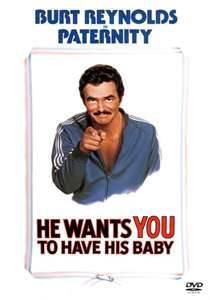
A 1981 flick--not exactly on point, but
there's not a lot to choose from for this topic!
“OK, the Kid's Mine.  Now What?”


Once paternity has been established, the next issue to, er, tackle is how much a court should award in child support.* As you can imagine, the high salaries of professional athletes can make "child support" synonymous with "windfall." On the one hand, it seems fair to hold a famous father financially responsible for the upbringing of a child he helped create the same as we would an average Joe.   


On the other hand, we don’t want to encourage the reckless promiscuity (or as we discussed yesterday, intentional seductions) by handing the woman a winning lottery ticket.  None of this matters, though.  It is important to understand that, in deciding family law cases, judges must put all the social complexities aside and base decisions on what is “in the best interest of the child."


Generally speaking, courts use three methods for determining child support levels.  The method that is ultimately used is determined by the law of that state:


     1.     Income Shares Method:  After determining the total income of both parents, the court estimates what percentage of that total income would be spent on the expenses for that child (plus any actual additional expenses unique to the situation).  Each parent's financial obligation is determined by the ratio of his or her income level to the combined income.

     2.     Melson Formula:  The court determines a "subsistence income"--one that meets the basic needs of both parents and all minor children of the parents.  The total income remaining is used to determine the amount of support.

     3.     Percentage of Income:  This is the simplest method, especially because the state's law dictates the percentage of the parent's income that goes to one child.  In Wisconsin, for example, a parent pays 17% of his or her income for the support of one child.  Under this model, the court also has the discretion to modify the award to the extent that imposing the statutory percentage would yield an unfair result.


The third method isn't just the easiest to administer, it is also the preferred method for professional athletes, since their income is almost guaranteed to be substantially higher than the mother's.  The problem with the first two approaches—other than their complexity—is that it is not always easy to determine which expenses are appropriate for determining the amount of support.  For example, should the court base expenses on the need of the average American (or citizen of that state), or should it be based on the expenses of children in wealthy households (e.g., a $10,000 mortgage payment vs. $1,200 rent payment, live-in nanny, horseback riding lessons, summer-long language-immersion trip to France)?


“How Can I Make Sure My—I Mean the Kid’s—Money Will Be Well Spent?”


Still, even with an eminently sympathetic judge, no matter what formula is used, the pro will still be the primary (if not only) source of support for the child, and yet will have little or no say in how the money is spent.  To allay concerns that the money will not be spent for the welfare of the child, courts have another tool at their disposal: the creation of a trust.  In such cases, a third party--perhaps a grandparent or attorney--is in charge of making sure the money is spent appropriately.  Even if the mother is in charge of the funds, though, she is obligated by law to spend the money in a responsible way.

Admit it--you'd give anything to be a trust fund baby!


There's another good reason to establish a trust beyond the concern for how the money is spent.  Although a player might have a very lucrative career with a high income at the time support is determined, he runs the risk of having his career shortened by injury, age, or a decline in skill.  If he makes money from endorsement contracts as well, his income could experience changes because of a dispute with the company in question, or even a downturn in the economy.


“Pay No Attention to Junior, Coach…I’m Ready to Play!”


Anyone who has kids can tell you that starting a family--no matter what form that family takes--changes your life.  For athletes in these touchy situations, though, the impact goes beyond dollars and cents.  Remember Antonio Cromartie?  The Jets had to give him a $500,000 salary advance so he could catch up on his back child support.  Not the ideal way to start a relationship with an employer. 

"Three hundred thousand?  No, man, I said five hundred thou.  Make it happen!"


When New England running back Dave Meggett failed to respond to a paternity claim that had been filed in Florida, he faced the threat of arrest if he traveled with the team to play the Jacksonville Jaguars.  The Patriots front office had to get involved--creating a major distraction for the team.  All the fuss seems a bit silly now that Meggett is serving a 30-year prison term for burglary and sexual misconduct.


One of the more notorious cases from the NBA was that of Shawn Kemp (left), who had fathered seven children by the age of 28.  According to the 1998 SI article,** a source in the (then) Seattle SuperSonics organization said that the distraction of so many support obligations, coupled with frustration of not be able to see some of his children, were the primary causes of Kemp’s meltdown during the 1997 season.  In the first half of the season, Kemp averaged 21.3 points per game and 11 rebounds; after the All-Star break, his averages dropped to 15.1 points and 8.5 rebounds.  He ultimately demanded a trade, and the same source said that his mounting support obligations were part of his motive for making the demand.


Of course, no matter the circumstances, and no matter the cost or distractions involved, both sides should remember that they have brought a child into the world.  With each new child comes new opportunity to make the world a better place, and we do that by giving that child the best chance for happiness, success and self-respect.  Not every family starts in the “traditional” way, but what matters is that every child knows he has a family that loves him.  And that’s not something a court of law can create—all of us, sports star or not, have to make that happen.


Well, I hope you've enjoyed this look at one of the more personal, yet public, topics in football.  To all fathers out there—traditional or nontraditional, expected or unexpected—have a wonderful Father’s Day!


*The primary legal source for my original law school paper (and now this post) was an article written by two player attorneys in Dallas, Texas:  R. Scott Downing and Katherine A. Kinser, “Family Law Issues That Impact the Professional Athlete,” published in the Journal of the American Academy of Matrimonial Law (15 J. Am. Acad. Matrimonial Law, 337 (1998)).


**Click here for a link to that article.

Wednesday, June 13, 2012

Need a Tie to Go With That Paternity Suit?

The cover of the article's issue
Several years ago, Sports Illustrated ran an in-depth article on the legal and social issues surrounding the growing number of professional athletes fathering children out of wedlock, often with multiple women.*  Obviously, all men who father children with women not their wives face the same set of issues:  the financial obligations; battles over legal issues like custody and decisions regarding the child's upbringing; how the existence of the child will impact other areas of his life; and, most critical, forging a relationship with that child.  For professional athletes, however, these issues can be much more complicated.


My alma mater.  Hail!
In my first year of law school at the University of Michigan, we were allowed to take one "elective" class during our second semester.  I chose to take Sports Law, a course being offered for the first time at the school.  A third of our grade was going to be based on a paper, the topic of which could be any of our choosing, as long as it had something to do with sports and law. 


Inspired by the SI article, which had been published two years earlier, I decided to write about the issues professional athletes face--both in the courtroom and the locker room--when confronted with a paternity lawsuit.  My topic choice was validated when a prominent agent (and lawyer) came to speak to our class.  Right off the bat he told us that if you want to become a sports agent, you have to become familiar with family law.  Although that was over ten years ago, this issue has gotten some fresh attention recently, when it came out that New York Jets cornerback Antonio Cromartie had fathered ten children with eight different women, including a daughter and son with his current wife.**  It became a story when he struggled to name all of his kids during an episode of the HBO hit series Hard Knocks:


With Father's Day fast approaching, I thought this would be as good a time as any to dust off the old law school files and resurrect my paper (the more interesting bits, anyway), which I titled "Personal Foul: Paternity Claims Against Professional Athletes" (clever, huh?).  Fortunately for you, this post (split between today and tomorrow) is not a verbatim rendering of the original--it's much shorter and I've omitted the legal speak wherever possible.


"Honey, I'm Pregnant."


Whether hoped for or completely unexpected, these three little words often elicit the same emotions--in more or less the same order:  shock, excitement, fear and wonder.  For the pro player, though, soon after hearing these words, several questions might pop into their heads when the woman giving them this news is not his wife.  For example, if there is any doubt in his mind that he could be father:

  • Should I deny paternity right away, and risk looking like an a-hole to my fans?
  • If I act the "gentleman" and own up to it right away, do I hurt myself when I challenge paternity later?
  • What if I don't do anything?  (By the way, keeping mum until paternity is conclusively established will typically be the preference of the lawyers—to the dismay of agents and publicity reps).

  
Then, once paternity is established, the pro's lawyers have to wonder:

  • How will a court figure out how much my client has to pay in support?
  • How can we make sure that the money is best used for the child's benefit?


I know this is a touchy subject, so before we get into the legal meat of the matter, let's lay a few things on the table.
First, the negatives.  Though many paternity cases involving pro athletes involve the irresponsible actions of an immature, inexperienced player and a probably equally immature woman, it is an unfortunate fact that there are women who target professional athletes and willfully seduce them in the hopes of getting pregnant.  In the SI article, former 49ers QB Jim Drunkenmiller recalled a moment from his NFL rookie orientation when two HIV-positive NFL groupies described how they seduced players.  Said Drunkenmiller:  "They wanted to let everyone know that girls out there will take a chance to get pregnant. They'll do anything, sometimes, to get money out of you."


And while there are definitely cases where a player was blind (perhaps willfully so) to the potential consequences of his promiscuity, some players are well aware of the stakes, and even seem to take pride in their fathering prowess--Antonio Cromartie being an apparent example.


Now for some positives... 
First, professional athletes among the most reliable at paying child support.  Before you get all sentimental about it, though, the reasons for their reliability are more practical than emotional:  they can usually afford to pay; they are easy to locate; and they often have lawyers, agents and/or accountants to make sure they are not delinquent in their payments.
Second, rookies coming right out of college aren't just thrown to the wolves, for lack of a better phrase.  As mentioned above, the NFL and the other major sports leagues conduct rookie orientation programs to advise them on how to deal with the various responsibilities and occupational hazards that go along with professional sports.  Topics for lessons include wealth management, dealing with the media and, yes, conduct with members of the opposite sex.  Never knew turning pro had so many pitfalls, huh? 


Several NFL teams, coaches and players are taking all of this a step further and sponsoring programs that encourage all fathers—fans and players alike—to actively participate in fatherhood.  One notable example should be familiar to “Reading Huddle” followers, who read Tony Dungy’s memoir, Quiet Strength. 

The Dungy Family

Former Indianapolis Colts coach Tony Dungy is a proud father and has always put family first.  He started an organization called All Pro Dad, which sponsors events for fathers and their kids, including monthly local breakfasts where fathers can build memories with their children and discuss family topics with other dads.  Pittsburgh Steelers coach Mike Tomlin, Baltimore Ravens coach John Harbaugh and several current and former NFL players are active spokesmen for the organization.  Visit www.allprodad.com to find events in your area.


Tomorrow, we’ll take a look at what happens when paternity is established and the courts have to figure out how much Daddy needs to pay in support.  Plus we’ll take a look at a few cases where this very personal issue spilled over to the playing field.  You don’t want to miss it!


*Grant Wahl & L. Jon Wertheim, “Paternity Ward,” Sports Illustrated, May 4, 1998.

**In a few months that number will skip to twelve, as Cromartie’s wife is pregnant with twins.

Tuesday, June 5, 2012

As Long As the Lawyers Get Paid…

You may have noticed that the NFL has been getting peppered with lawsuits recently.  With such a litigious offseason, and being a former lawyer, I thought you might appreciate a summary of what’s going on in the NFL’s legal world right now and, later, a look at some of the many legal issues that face the league and NFL teams alike.


We’ll start today one of the most recent and interesting cases, filed by Jonathan Vilma against NFL Commissioner Roger Goodell.


Jonathan Vilma v. Roger Goodell  (filed May 17, 2012 in U.S. District Court, Eastern District of Louisiana)


On May 17th, New Orleans Saints linebacker Jonathan Vilma filed a lawsuit against NFL Commissioner Roger Goodell for libel and slander.  Vilma is one of several Saints players (some of whom are no longer with the team) who were recently punished for their role in the New Orleans Saints “bounty” system, under which players were rewarded with cash “bounties” for injuring and/or sidelining opponents (a scandal that has been dubbed “Bountygate” by the media—how original).  Vilma received the harshest punishment among the players, with a suspension for the entire 2012 season.

Vilma (51) and the coach behind Bountygate, Gregg Williams


Vilma claims that Goodell committed libel, slander and the intentional infliction of emotional distress in the course of disciplining Vilma.  The lawsuit, filed in federal court in Louisiana, claims that public statements made concerning Vilma’s involvement in Bountygate were false.  Vilma has vehemently denied his alleged role in the team’s bounty system and has appealed his suspension.  He has also demanded that Goodell release any evidence he has that directly links him to the payment of bounties.


The implications of this suit on the NFL go well beyond this isolated case.  Before I get into that, however, allow me to give a brief law lesson…


LIBEL AND SLANDER

You will hear the media refer to this case as a defamation lawsuit.  “Defamation” is an umbrella term that covers any false statements made about someone else that cause some harm to the subject of the statements.  Black’s Law Dictionary, the Webster’s of J.D.s, defines “defamation” as “[a]n intentional false communication…that injures another’s reputation or good name.”


It is important, though, to understand that Vilma’s suit specifically alleges that Goodell committed libel and slander when accusing him of being part of the bounty scandal.  “Libel” is defamation that is communicated in writing, pictures or signs.  Black’s elaborates further:  “In its most general sense, any publication that is injurious to the reputation of another.”  As you might have guessed, “slander” is the oral communication of false statements that injure another’s reputation.  Of course, an absolute defense against to charges of libel and slander is proof that the statements made about the defendant were true.

Get it?  'Cause he's a mime, and slander is spoken? Hah!


Why is it important to distinguish libel and slander from defamation?  In any correctly-written legal complaint, and Vilma’s is one, the plaintiff must set out each legal basis for the lawsuit separately.  Then, he must prove each theory to receive damages.  If one theory can’t be proven, then he may still have a case under another.  During the pretrial process, some theories might be thrown out, or dismissed, leaving others open for trial.


Vilma’s complaint claims five theories of libel:  (1) libel per se*, with injury to professional reputation; (2) libel per se, with injury to personal reputation; (3) libel per se, with accusations of criminal conduct; (4) libel by implication; and (5) libel with reckless disregard, or malice.  Since libel applies to written statements, Vilma is referring to any written statements Goodell has made to the public, such as press releases.


As for Vilma’s theories of slander, the second verse is the same as the first.  The complaint alleges:  (1) slander per se, with injury to professional reputation; (2) slander per se, with injury to personal reputation; (3) slander per se, with accusations of criminal conduct; (4) slander by implication; and (5) slander with reckless disregard, or malice.


INTENTIONAL INFLICTION OF EMOTIONAL DISTRESS


Intentional infliction of emotional distress (or “IIED”) is a fun claim to study, just because of the various scenarios that can give rise to it.  As we go about our daily lives, we have to endure a certain amount of emotional distress, just from the sheer rudeness of others—honking, cutting in line, cursing in traffic, etc.—and we are expected to have skin of a certain thickness and deal with it.  However, IIED comes into play when the malice of another person has risen to such a level that the victim suffers significant emotional harm.


A plaintiff claiming IIED has to show:

(1)    “Extreme or outrageous” behavior that

(2)    Intentionally or recklessly caused

(3)    Severe emotional distress

A successful claim for IIED has to be about more than hurt feelings—there has to be some malice by the offender who acts beyond all reasonable bounds of decency, causing trauma to the victim.  A good example is taking someone you know to be an extreme claustrophobic and locking them in a dark closet.  It’s hard to believe that a bruising linebacker such as Jonathan Vilma can even suffer IIED at the hands of a guy in a suit, but that's not for me to judge without hearing all the facts (by the way, Vilma would need to show evidence of his emotional trauma, like therapy bills). 

To learn more about IIED, read this helpful article on FindLaw.com:  http://injury.findlaw.com/torts-and-personal-injuries/intentional-infliction-of-emotional-distress.html.


WHAT THIS MEANS FOR THE NFL AND ROGER GOODELL


The NFL needs this case to disappear quickly, preferably with a dismissal.  Why?  Well, the longer the case survives, the greater chances that the judge will order discovery, which would certainly include compelling Goodell to provide the evidence obtained by the league indicating that Jonathan Vilma was directly involved in the bounty system.  The reason this is undesirable for the league is that they would likely need to identify the sources of their information, the identities of which have been confidential to this point.  A release of this information would send a chill through the league, discouraging cooperation by players and team personnel in similar investigations in the future.


The league is also concerned with the precedent of such a suit being given credibility by the courts.  To begin with, the NFL will want the courts to recognize that their involvement in such matters is preempted by the collective bargaining agreement, which gives the NFL commissioner ultimate authority in meting out punishment to offenders of league rules.  If the court decides to hear the case, that decision could undermine the commissioner’s authority.


Of course, an alternative to trial is an out-of-court settlement.  However, this prospect yields its own dangers.  If the NFL and Goodell agree to compensate Vilma in any capacity, even a reduction in his suspension, you’re likely to see copycat lawsuits by punished players in the future. 


UPDATE:  On July 2, 2012, Vilma filed a second lawsuit in federal court alleging that Goodell had not made a timely decision on Vilma's appeal of his season-long suspension resulting from the bounty scandal.  The basis for the suit was that, according to Vilma, the collective bargaining agreement required Goodell to make a ruling as soon as practicable after the appeal hearing, which took place on June 18th.  According to this new complaint, since the other players involved in the case presented no new evidence at that hearing in protest, Goodell should have made his decision by June 25th, the first business day after the record in the case was closed.  However, Goodell rendered the lawsuit moot by issuing his ruling the very next day and upholding the suspension of Vilma and other punishments meted out to other players involved in the scandal.


*An action is libelous (or slanderous) “per se” if the statements are such that the plaintiff doesn’t need to prove the damages caused by their impact.  A good example is a statement that accuses someone of committing a crime.  Contrast this to a statement that is “libelous per quod,” which might not usually be damaging, but has a damaging effect because of the circumstances or context in which it was made. 

Friday, April 13, 2012

If It Was Good Enough for Al Capone...


Welcome to the conclusion of our two-part mini-series on the impact of taxes on NFL players.  Today, we take a look at some former NFL stars that have had some—shall we say—issues with handing over their hard-earned money to the government.  Some have even tried to use the system to con money out of the government.  Two of these names you’re sure to recognize; others you may be hearing for the first time.  Either way, they all have something in common:  each found out that you can run, but you can’t hide from the tax man.
 

The Juice at his sentencing in 2008
O.J. Simpson:  The former NFL running back (and murder defendant) allegedly owes the State of California $1.44 million in taxes; a tax lien was filed in his case in September 1999.  Simpson’s state of residence is now Florida, though he currently resides in the Lovelock Correctional Center in Nevada.  In 2008 he stood trial and was found guilty for robbery charges stemming from an incident in which he took sports memorabilia at gunpoint from a man in Las Vegas hotel.


Lawrence Taylor:  The Hall of Fame linebacker, who was featured in Naptime Huddle’s “Stars and Legends” series, has had his fair share of financial troubles.  He lost a significant amount of money as a victim of a scheme involving the short sale of stock in a company he started at the end of his NFL career.  His troubles didn’t end there, however.  He pleaded guilty to filing a false tax return for 1990 and in 2000 was sentenced to three months of house arrest, five years of probation and 500 hours of community service.  Of course, you may also be aware that his legal troubles have continued, as in 2011 he pleaded guilty to sexual misconduct and patronizing an underage prostitute.  He is currently serving a sentence of six years’ probation.


Jeffrey L. Walker:  Jeffrey Walker was an offensive lineman for the San Diego Chargers and New Orleans Saints over a six-year period in the late 1980s.  In October 2011, he pleaded guilty to charges of wire fraud and tax evasion; he admitted two charges and ten others were dismissed.  His crime?  He bilked investors in four states of at least $2.2 million dollars.  He told investors they were buying shares in a resort project in China.  Instead, he spent the money on himself, buying luxury cars and recreational vehicles.  He also made false statements in his federal tax returns from 2004 to 2006.  Walker’s sentencing has been delayed to give prosecutors time to identify and notify possible victims.


"Yo, Dawg! Thanks for letting me file your tax return!"
Freddie L. Mitchell, Jr.:  The former first-round pick wide receiver had a fairly lack-luster NFL career with the Philadelphia Eagles on the field.  Off the field, he made a habit of insulting opponents and making his discontent over his limited role on the team public.  He only lasted four years in the NFL, and his post-football career hasn’t panned out too well, either.  In 2008, he bought a barbecue restaurant in his home town of Lakeland, Florida, but it closed in 2009.  Mitchell turned himself in to authorities last month under an indictment for federal tax fraud charges.  He is accused, along with two partners, of recruiting professional athletes to hire them to file their returns; they would then file phony returns in the athletes’ names claiming financial losses for businesses that didn’t exist.  Nice way to make friends, huh?


Darick Holmes:  Darick Holmes is a former running back who played for the Buffalo Bills, Green Bay Packers and Indianapolis Colts in the late 1990s.  After his retirement, he bounced around from job to job, never really finding his calling.  In August 2010, Holmes was sentenced to three years’ probation, including one year of house arrest (a lenient sentence compared to the recommended one year prison term), after pleading guilty to 15 counts of felony tax fraud.  He had teamed up with another man in Buffalo to teach people how to defraud the Earned Income Credit program, which is intended to be tax relief for the poor.  The pair got portions of the refunds their “clients” received from the government.  Darick’s brushes with crime haven’t been limited to fraud, though.  In February 2009, he was robbed and shot several times while he was delivering money for a friend’s marijuana buy.  His light sentence for the tax fraud was due in large part to the testimony the judge heard about Holmes’ commitment to mentoring at-risk youth, and guiding them away from gang membership.


So, as you get ready to file your tax returns on Monday, be sure to keep these cautionary tales in mind, lest you be tempted to find a way around the tax man…

Wednesday, April 11, 2012

Yes, RG3, There is a Tax Man


As many of you are aware, the deadline for filing your 2011 U.S. federal and state tax returns is this Monday, April 16th.  Although this can be a painful time for us Americans, it may give you comfort to remember that this annual torture is also borne by professional athletes, including players in the NFL.  Whatever your occupation or income level, April 15th (or the occasional 16th) is a date to be dreaded.


What sets professional athletes apart, however, are certain tax issues that the rest of us are unlikely to face, at least on the same scale.  Today we’ll take a look at two of these taxing matters:  whether NFL fines are deductible and city wage taxes.


Are NFL Fines Tax Deductible?


What I wouldn't give for a whole season off...
If you’ve been following the latest NFL news, you’ve probably heard more than you want to about the New Orleans Saints and their “bounty” system, which paid cash bonuses for hits that caused injury to opposing players.  The fallout from the scandal was swift, and the punishment harsh:  an indefinite suspension for defensive coordinator Gregg Williams, who is now with the St. Louis Rams; head coach Sean Payton is suspended without pay for the entire 2012 season; general manager Mickey Loomis is also suspended without pay for the first eight regular season games; and the team must pay a $500,000 fine. 


The league has not yet imposed fines on the players who were involved.  However, this is only because Commissioner Roger Goodell wants to investigate further the extent of each player’s involvement.  He wants to make sure each actor’s fine is commensurate with his level of culpability.  Since the bounties were primarily player-funded, you should not expect Goodell to go lightly on anyone.


In the meantime, maybe the players involved should contact their CPAs (the NFL Players Association has already hired lawyers for them) and ask them the question I’m sure is burning in their brains:  “Will my fines be tax deductible?”*


Your first reaction might be a resounding “No.”  These acts, and most actions resulting in NFL fines, were violent, broke the rules and were just plain wrong.  The IRS, however, doesn’t always care about where items on the balance sheet fall on the morality scale.  Instead, we have to take a look at the tax code’s requirements for business expense deductions:


‘  The expense must be both “ordinary and necessary.”  To be “ordinary,” it has to be common and accepted in the trade or business.  An expense is “necessary” if it is “helpful and appropriate” for your trade or business.  The IRS emphasizes in Publication 535 that the expense doesn’t have to be indispensable to your business to be eligible for deduction.


‘  Despite its generally amoral nature, the U.S. tax code does have a kind of moral compass.  Penalties and fines that result from any violation of law are not deductible.  This can include penalties for violent crimes, as well as for nonviolent crimes, like a parking ticket.  Instead of being based in morality, though, the reason for this is that allowing such a deduction would essentially result in the government giving back the money that it took from you for the violation of law.


Now that we have the standard for a business expense deduction, let’s apply it to the case at hand.  Was the bounty system “ordinary”?  We would like to think that this was an isolated incident, but revelations from multiple sources since the story first broke would indicate otherwise.  For one thing, it appears that Gregg Williams had such a system at each of his various stops around the league—including the Washington Redskins and Buffalo Bills.  While many players have come forward condemning Williams and the Saints’ players, others have just shrugged their shoulders.  Some, like Pittsburgh Steelers linebacker LaMarr Woodley have come out and said that incentives in player contracts are much like player-sponsored bounty systems.


Now we have to ask whether the fine is necessary, meaning “helpful and appropriate.”  Certainly the players would argue that the bounty system was “helpful and appropriate” as an incentive to play with more aggression, which better positions the team for victory (this is Woodley’s basis for his comparison).  As for the payment of the fine itself, it would probably even rise to the level of “indispensable” (again, not required), since a player has to pay his fine to be able to continue playing in the league.


OK, what about the restriction on fines and penalties?  The recent Saints’ bounty system resulted in violence fueled by greed.  Morally reprehensible.  However, though bounties are prohibited by NFL rules, they are not a violation of U.S. or state law, for now.  There’s a chance this could change, though.  United States Senator Dick Durbin is putting together a Judiciary Committee hearing about the use of bounty systems in the NFL and the other professional sports leagues.  For the most part, hearings like these are little more than a good show for politicians’ constituents.  However, you never know in this town, especially if there are many more revelations of other bounty systems in the weeks and months to come.

"But Coach Williams, what if we get caught?"
"Don't worry, Vilma.  Your fines will be tax deductible!"


So, it looks like NFL fines (and fines imposed by a player's team) are deductible as business expenses.  It is important to note, finally, that business expenses must exceed two percent of an employee’s adjusted gross income to be deductible.  With the exorbitant salaries for many players, the fines levied by the NFL might not meet this standard—though in this case, the league will probably try their hardest to make it so.


City Wage Taxes (“We just lost to the Eagles and now this?!?”)


It may be news to some of you, but not others, that there are some cities and counties that impose a tax on wages earned within their boundaries.  Most jurisdictions only impose this so-called “wage tax” on residents.  However, there are some notable exceptions, cities that also impose this tax on non-residents, at an equal or lower tax rate.


What does this mean for an NFL player?  Well, for those who are residents of these cities, it means an extra ding on every paycheck.  Remarkably, it also applies to a player’s game check when that player is in a wage tax city for an away game.  In other words, a player is taxed even though he is on the visiting team.  The amount of the tax is based on the number of days you were in the city.  As you’ll see from the list below, this tax is not going to be insignificant when you consider how much an NFL player makes for playing in just one game.


The following are NFL cities that apply a wage tax, with the tax rates of each (as of August 2011): 

‘  San Francisco, CA  (1.5% for both residents and non-residents, imposed on employer)

‘  Denver, CO  (for both, $5.25 on income over $500)

‘  Indianapolis, IN  (1.62% for residents; 0.405% for non-residents)

‘  Baltimore, MD (3.05% for residents; actually a state tax for non-residents, 1.25%)

‘  Detroit, MI (2.50% for residents; 0.013% for non-residents)

‘  Kansas City, MO  (1.0% for both)

‘  St. Louis, MO (1.0% for both)

‘  New York City, NY  (between 2.9% and 3.876% for residents only)

‘  Cincinnati, OH  (2.10% for both)

‘  Cleveland, OH, (2.00% for both)

‘  Philadelphia, PA  (3.928% for residents; 3.4985% for non-residents)

‘  Pittsburgh, PA  (3.0% + $52 per year for residents; 1.0% for non-residents)


The city offered an amnesty period back in 2010
As you can see, Philadelphia, PA boasts the highest city wage tax.  Gotta feel sorry for players in the NFC East…


Well, I hope this has made you feel a little bit better about your own tax return.  If not, and you’re thinking about filing late, or perhaps contemplating an alternative to filing altogether, tune in for our next post, when we’ll look at the fates of some NFL players who tried to buck the system.


*Another question should be whether payments a player received from the bounty system need to be reported as income.  From the articles I’ve read, the answer is yes—even if they were “under the table” and in violation of league rules, income is income and should have been reported.